

How To Buid Simple Router Templates
In this post, I'thousand sharing some tips on getting started using a router, breaking down the unlike types, and giving you some projection ideas y'all can practice with!
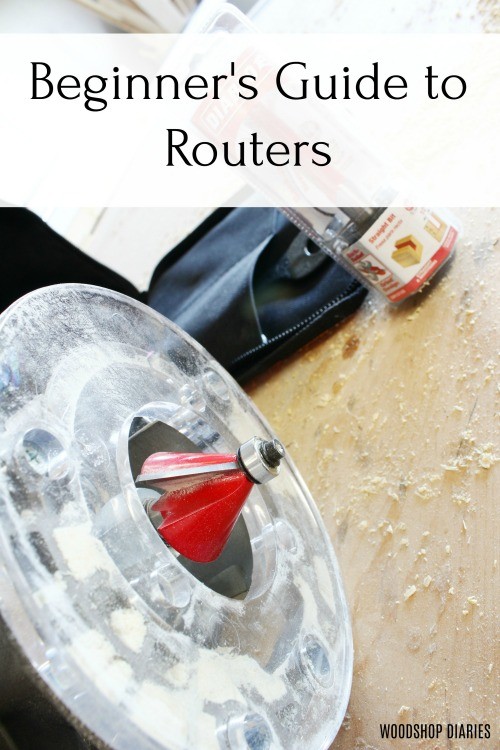
Afterward a recent poll on my Facebook folio, I was overwhelmed with how many people had then many questions about how to use a router.
.
I'm non a router expert, but I've used one a time or two (or a hundred). So I wanted to put together this router guide with all the information that I've learned over the years to assistance others who had questions and are merely starting out.
.
This post contains affiliate links. See policies page.
Router Guide: What is a Router?
Routers come in many shapes and sizes. I'll encompass the various types below, but, basically, a router is a ability tool that uses a shaped cutter (or a scrap) to make decorative edges, or grooves in wood.
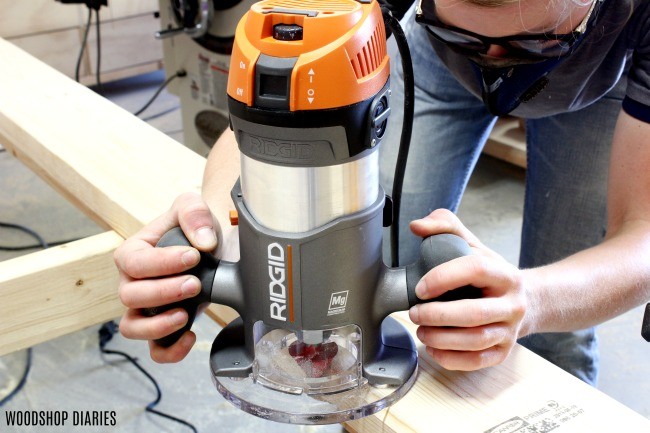
Routers are a super versatile tool. And like any ability tool, they pose a possible danger, especially if yous aren't certain how to use it.
.
Be sure to read manufacturer's instructions on your routers and get comfortable using them on minor projects before tackling anything huge.
Router Guide: Why Practice I Demand I?
Routers are really handy to have in a woodshop. I don't use mine on every project, but I have used them on several.
.
A router is one of those tools that you may not utilize every twenty-four hour period, but at that place's not really an alternative to use when you demand it. It's both a versatile, but specialized tool. Nothing else really takes it's place.
.
They are smashing for not only adding some decorative touches to your projects, but they also can be used to cut slots, grooves, and dadoes for joinery methods, flatten tabular array tops, carve, and smooth out rough or uneven edges when needed.
.
Here are a few examples of how I've used my router. These are a just a few of the many ways y'all can use them:
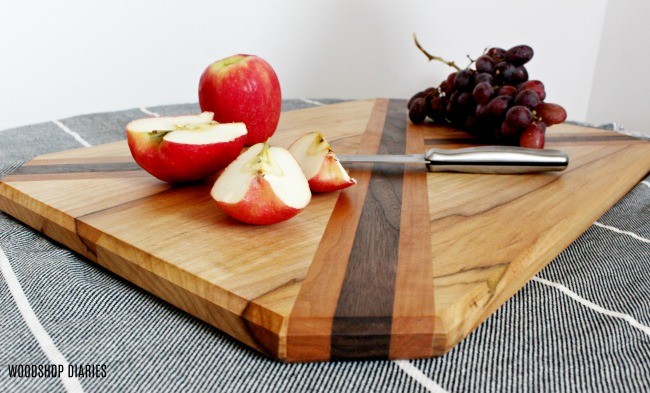
Add together a decorative edge on a project
Check out how I used a router on this bit wood cutting board project.
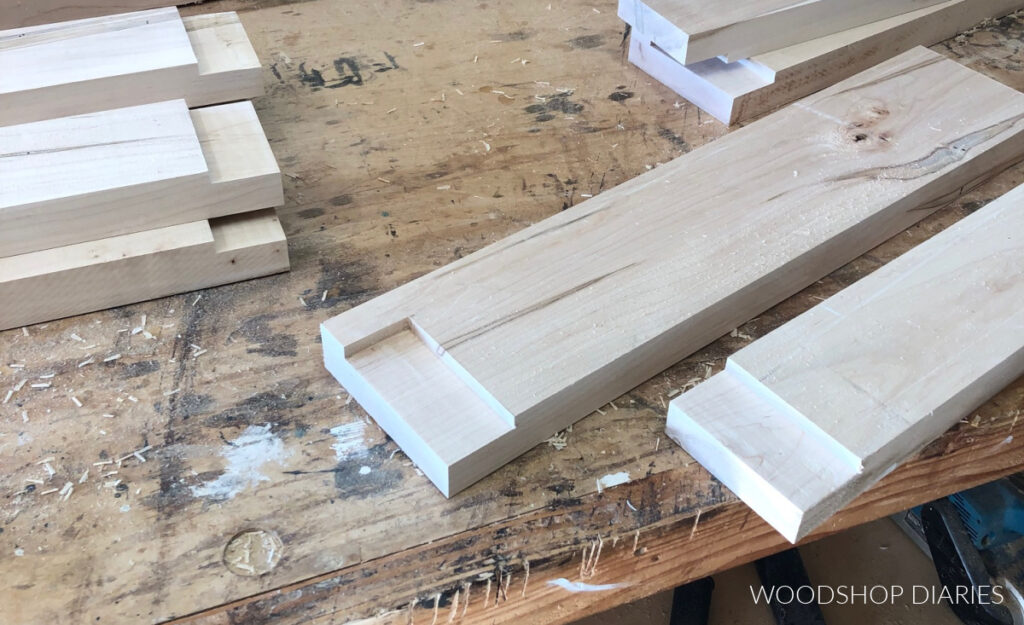
Cut out big rabbets for joinery
Check out how I used a router on this dining table build to join the legs and apron.
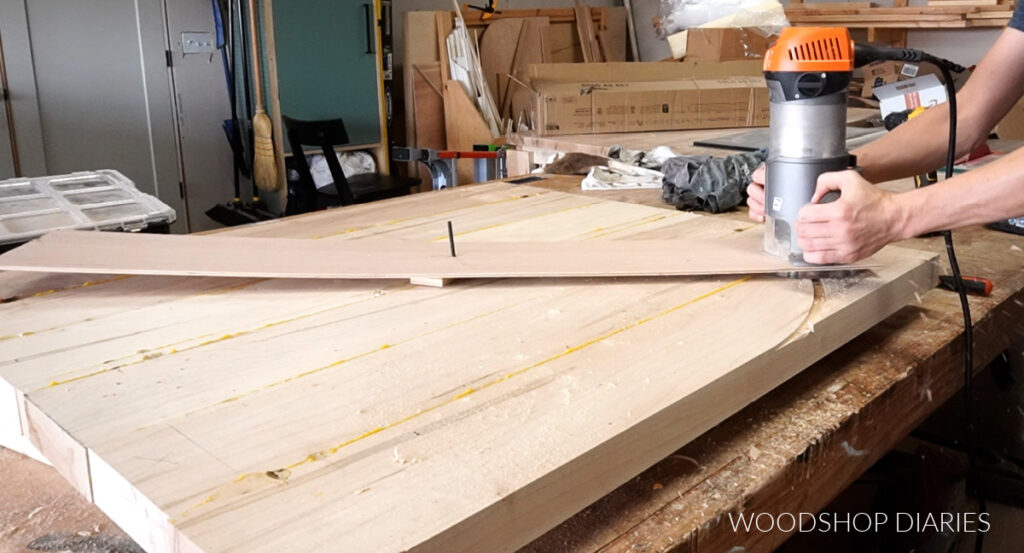
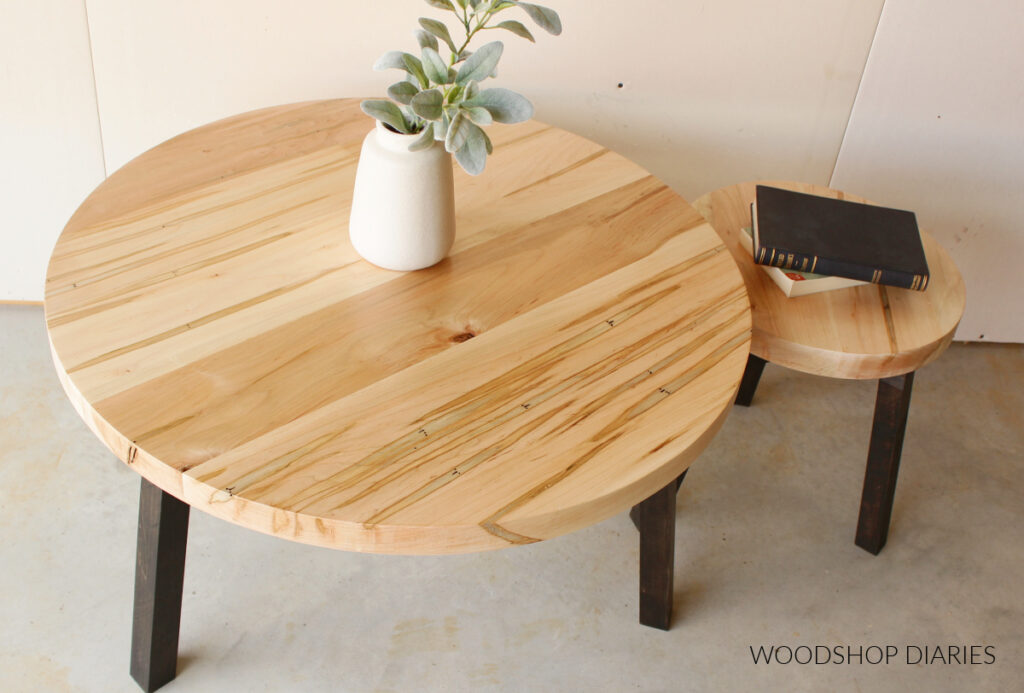
Cut a perfect circumvolve
Check out how I used a router to cut a perfect circle to build these round coffee tables.
Smooth uneven edges after glue ups
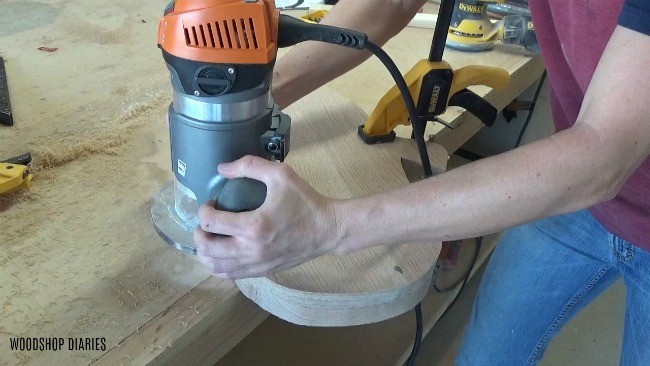
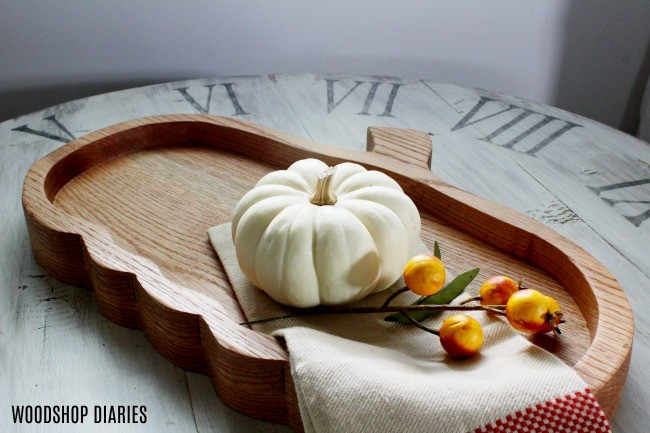
Check out how I used a router to flush cut the edges of this DIY pumpkin tray after gluing the pieces together.
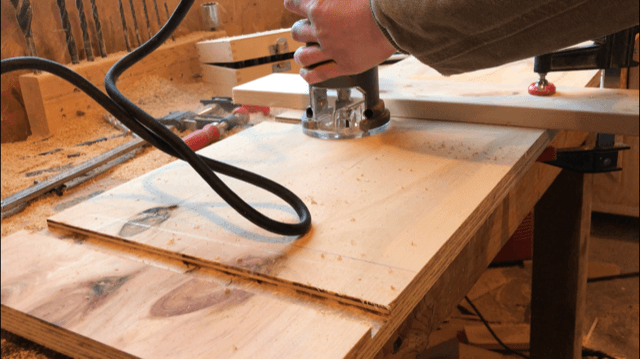
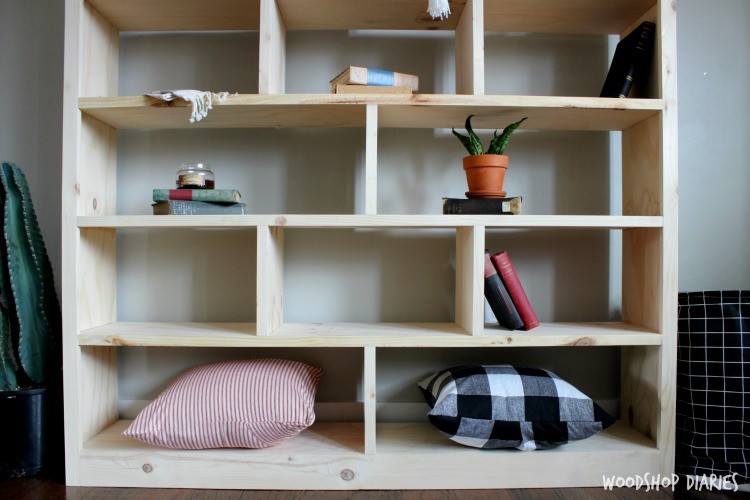
Cutting dadoes to assemble shelves
Check out how I used a router to cutting dadoes to assemble this large DIY modern shelving unit.
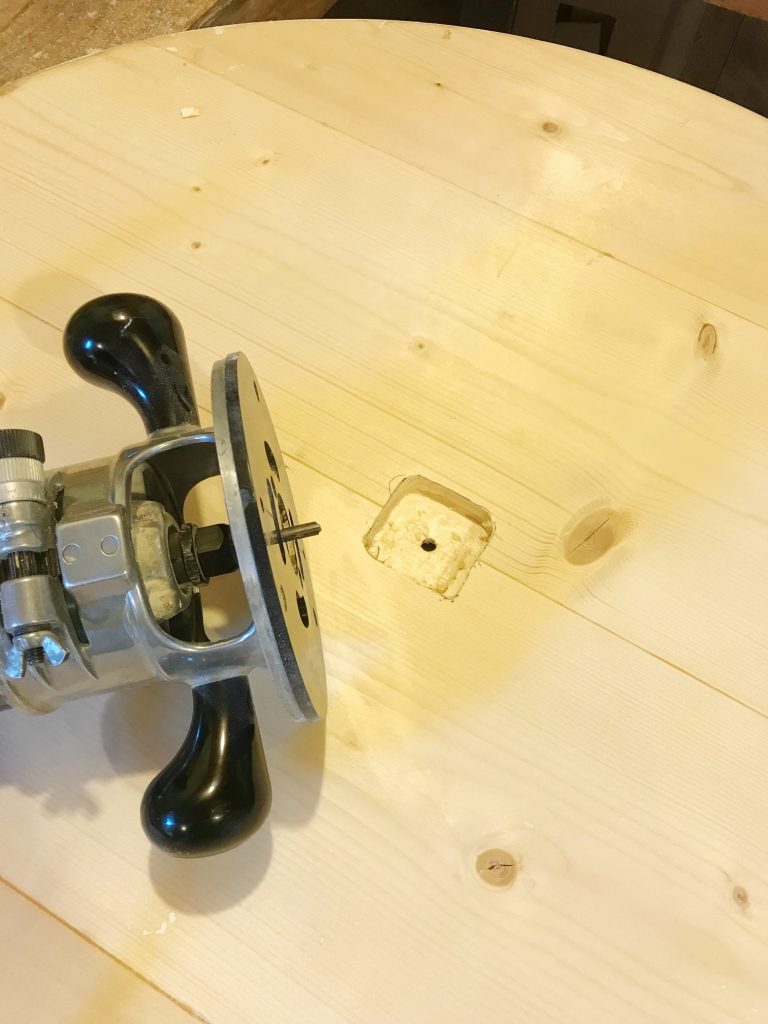
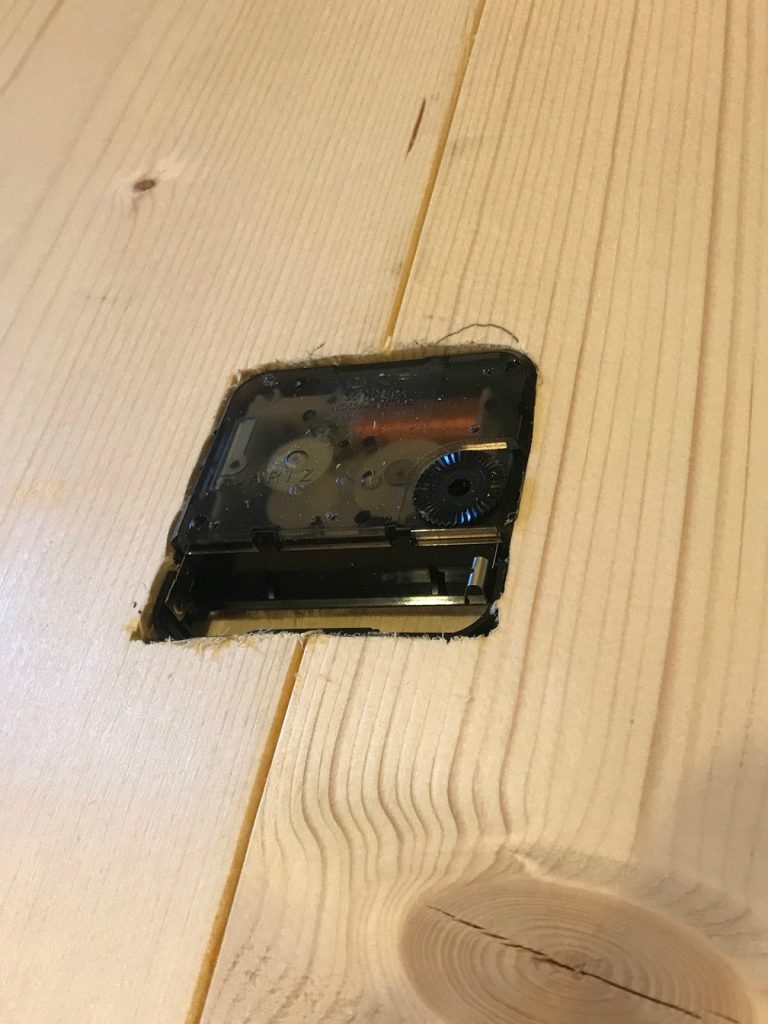
Cut out a hole in the middle of a project
Bank check out how I used a router to route out a hole to install a clock mechanism in this DIY circular forest clock project.

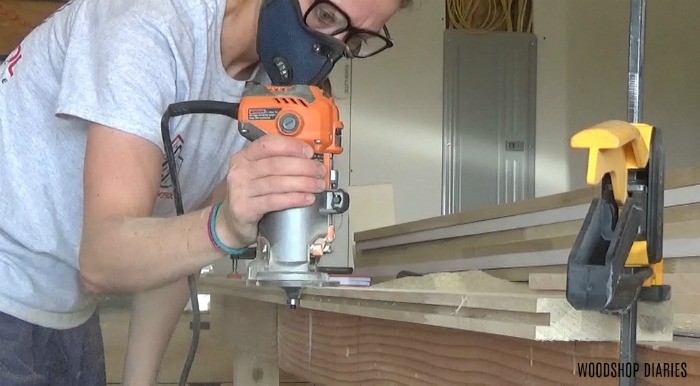
Brand frame and panel cabinet doors
Check out how I used a router to build these DIY shaker style cabinet doors.
-
-
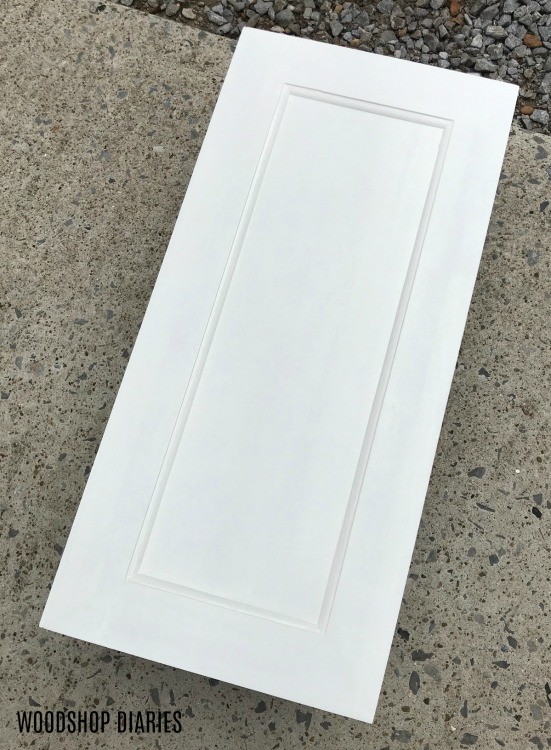
How to Build Cabinet Doors
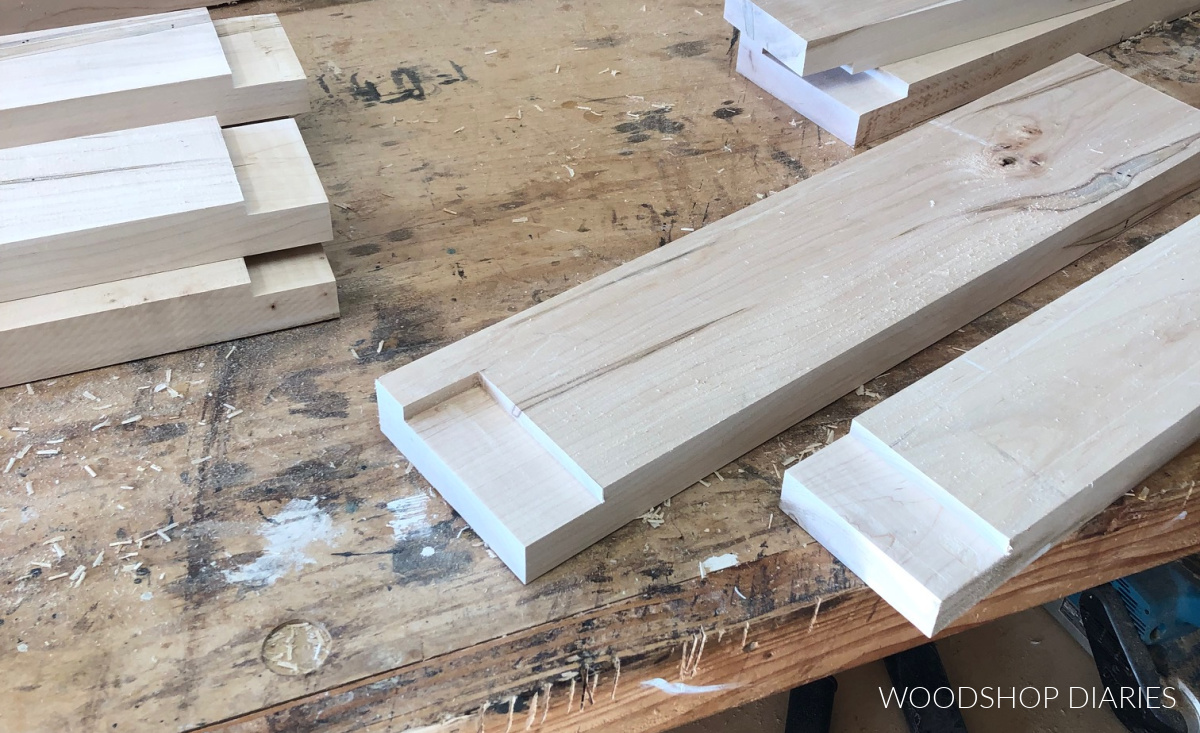
Specialized router $.25 can also exist helpful in making cabinet doors, cutting key hole slots, and cut pieces out from templates.
Router Guide: What Kind Are There?
There are several types of routers and some of the terminology overlaps. But, there are three bones types of routers.
.
They may come in different sizes and they may be called different names, merely they generally autumn into one of these categories: trim, fixed base, or plunge.
.
Let's also cover the terms collet and shank before I dive into this.
.
A collet is the metal sleeve on a router that you insert a router bit into. A shank is the part of a router bit that gets inserted into the router. (This is just like with drills and drill $.25.)
.
These typically come up in ¼″ and ½″ diameter sizes on routers.
Trim Routers
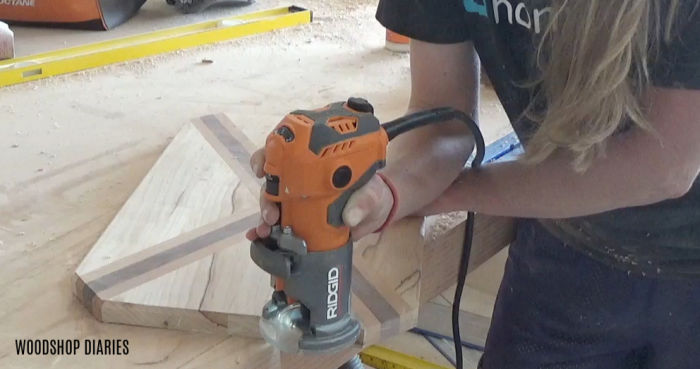
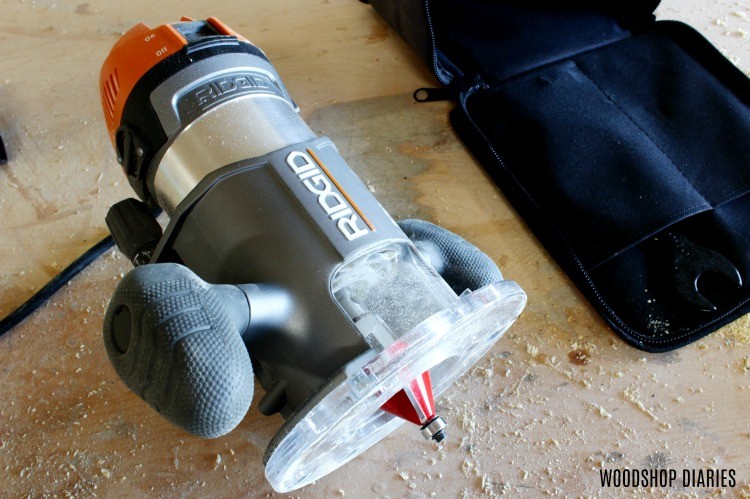
Trim routers are small-scale routers that tin typically be held with one hand like shown hither.
.
Sometimes they are called palm routers or hand routers. I'one thousand currently using this corded Ridgid Trim Router in my store. It also comes in a battery powered version if you want to ditch the cord.
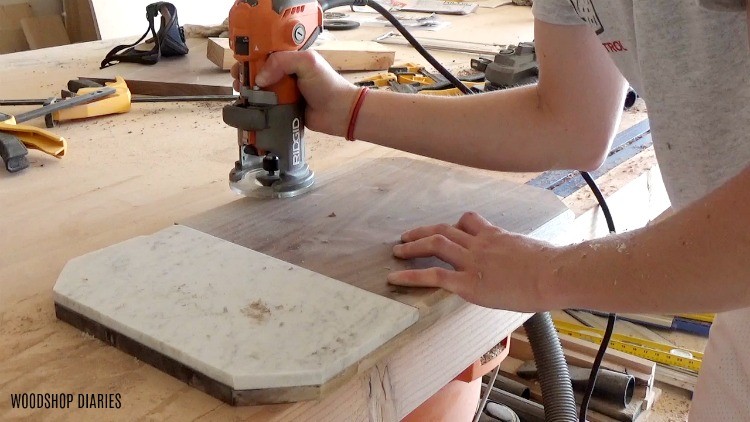
Trim routers ordinarily have ¼″ collets for ¼″ router bit shanks and are all-time used for modest details like calculation decorative edges shown here in this cutting lath.
In my feel, they don't exercise well removing a large amount of textile at once. I've used mine in a circumvolve jig to make a thick, circular table summit, but I don't recommend it. It'southward merely too small for making large cuts.
Fixed Base Router
TECHNICALLY, a trim router is as well a fixed base of operations router, but when I talk about fixed base of operations routers, I typically think near mid and total sized versions. Trim routers are kind of an animal of their ain.
.
Fixed base routers are routers that continuously cut at the same depth. Now, the depth is adjustable between cuts, but unlike a plunge router (I'll talk over below), you lot can't elevator and plunge while it's cut–hence the term "stock-still base."
.
They unremarkably have two handles on each side so they can be held and controlled with 2 hands. And they are unremarkably larger and more than powerful than trim routers.
They can come in TONS of sizes (as far equally horsepower goes) and can be ¼″ or ½″ collets.
.
Personally, I'thou using this Ridid ii HP Fixed Base Router and information technology uses a ½″ collet and I LOVE it.
.
The larger router cuts much thicker fabric than my small trim router without bogging down and is much easier to control with the 2 handles on each side.
.
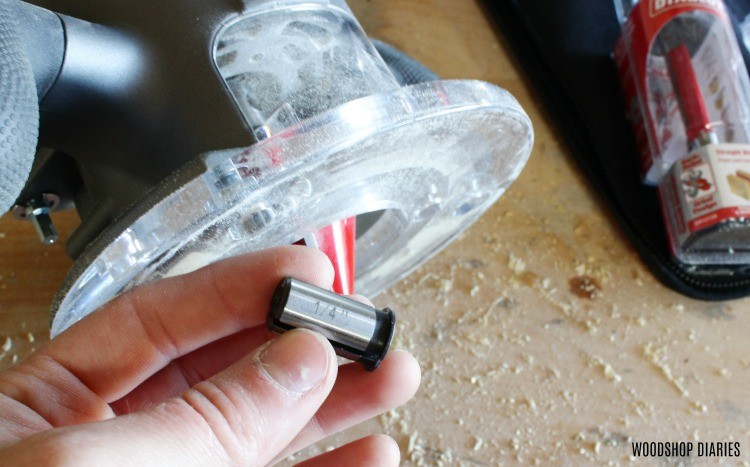
Also, the ½″ router that I'm using comes with a ¼″ collet zipper and then I can still employ all my old ¼″ router $.25 with information technology even though they are a unlike shank size.
Plunge Router
I don't take a plunge router to show you pictures of, only basically, a plunge router is simply a router that has a "springy looking base" that allows you to plunge the bit into the wood and lift it back up.
.
This is useful for carving signs where you need to lift the bit between messages or designs yous are etching.
.
Information technology's handy to have the power to plunge and some fixed base routers have a separate attachment you tin can purchase to give you lot both fixed and plunge base of operations options.
Router Guide: Which is All-time?
It all just depends on what you plan to apply it for.
.
If yous but want to add some decorative edges to your projects and are on a budget, a trim router is probably your best option.
.
It'south the cheapest option, but also has the least amount of power. Information technology's great to starting time out with and you can upgrade after.
.
If y'all plan to use information technology to cutting out circles, tabular array tops, cut big dadoes, or y'all are going to be using it on a lot of thick cloth, I'd upgrade to a larger fixed base of operations router.
.
I got my fixed base router considering my trim router simply wasn't cut it (pun intended) to help me cut out circles in 2x material. The larger router is much easier to command, likewise, and then I feel more comfortable using it.
.
That said, if you think you may ever desire to employ the functionality of a plunge router, I'd recommend getting a fixed base router that has the add on option to use it every bit a plunge router likewise. Like a ii-in-1.
Router Guide: How To Apply a Router
That'due south a tricky question to answer because routers are SO VERSATILE, so you may utilise them a little differently for each application.
.
Still, I'yard covering the BASICS in this post, so first, nosotros have to install the bit.
Router Fleck Types
Routers tin use A TON of different $.25. Hither are several different types you tin browse through to come across all the options.
.
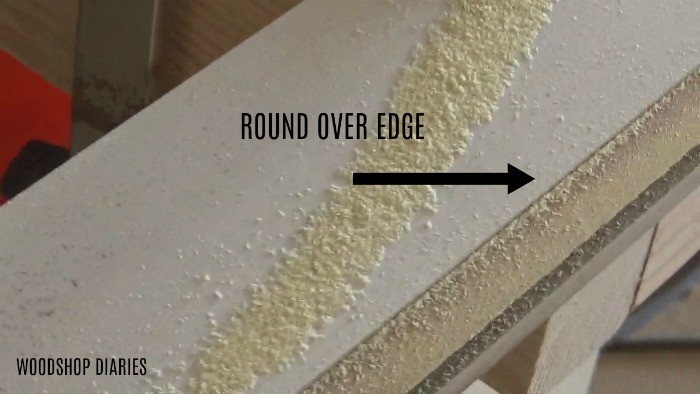
Some are for edges and they will have a picayune bearing at the bottom or the top. This begetting is designed to ride along the edge of the lath while the cutter cuts a profile.
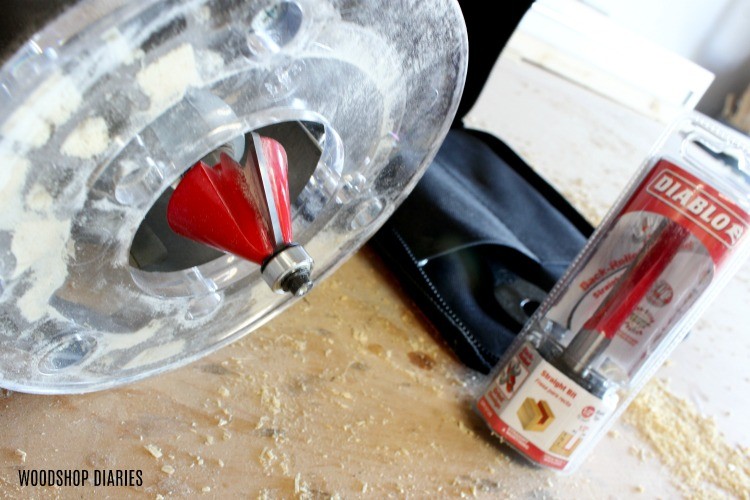
Some common decorative edge bits are chamfer, Roman Ogee, round over, and cove.
.
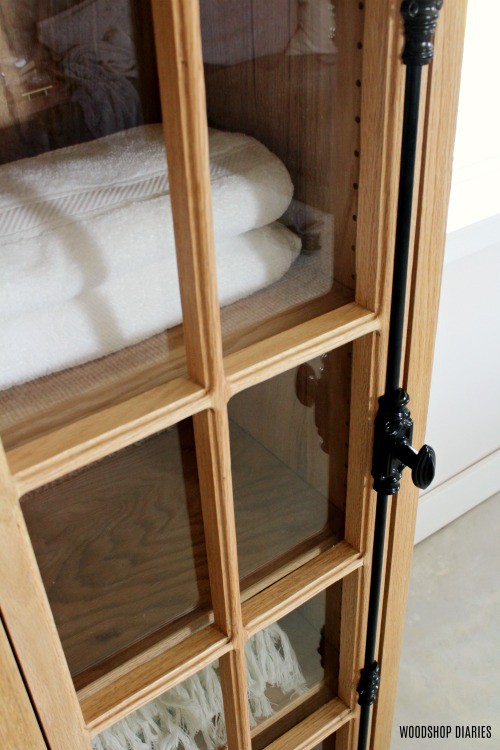
Yous can see the chamfer along the bottom border of the tray in the first photo below, the Roman Ogee around the edge of the door, and the round over on the cabinet door frame below.

And some router bits are for cut grooves–like a straight chip, juice groove bit or a dovetail bit.
.
Straight bits come up in unlike sizes and are commonly used for cut dadoes. I also employ them when I cut out circular table tops.
.
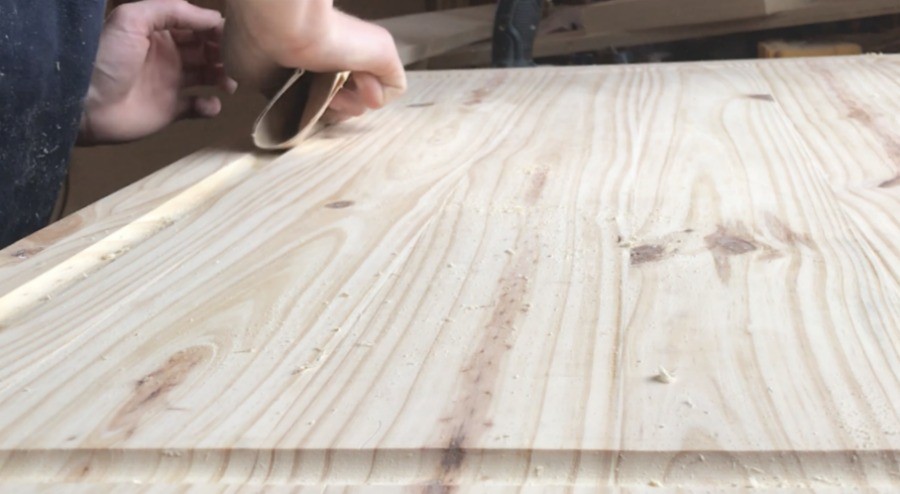
5 groove $.25, round nose (or juice groove $.25), and other decorative groove $.25 come in diverse sizes as well and are oftentimes used for carving designs like the juice groove shown below in this stove peak cover.
Flush trim $.25 are another very common chip used in woodworking.
.
These are handy for applications like where you glued two pieces together and the edges aren't flush. I used a affluent trim bit in this pumpkin tray project where I glued a piece onto the top and they didn't lucifer upwards perfectly.
.
Instead of sanding for hours, I used a flush trim chip to make clean upward my edges.

Installing the Router Bit
Once you make up one's mind which bit you want to utilize, follow manufacturer's instructions to install it into your specific router.
.
Typically, you just slide it into the collet and use the included wrench (routers come with a wrench for this) to tighten the nut.
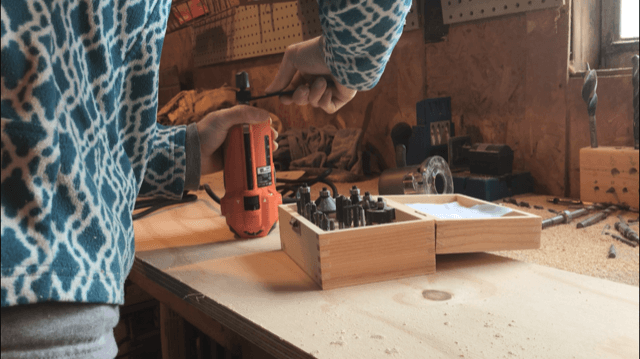
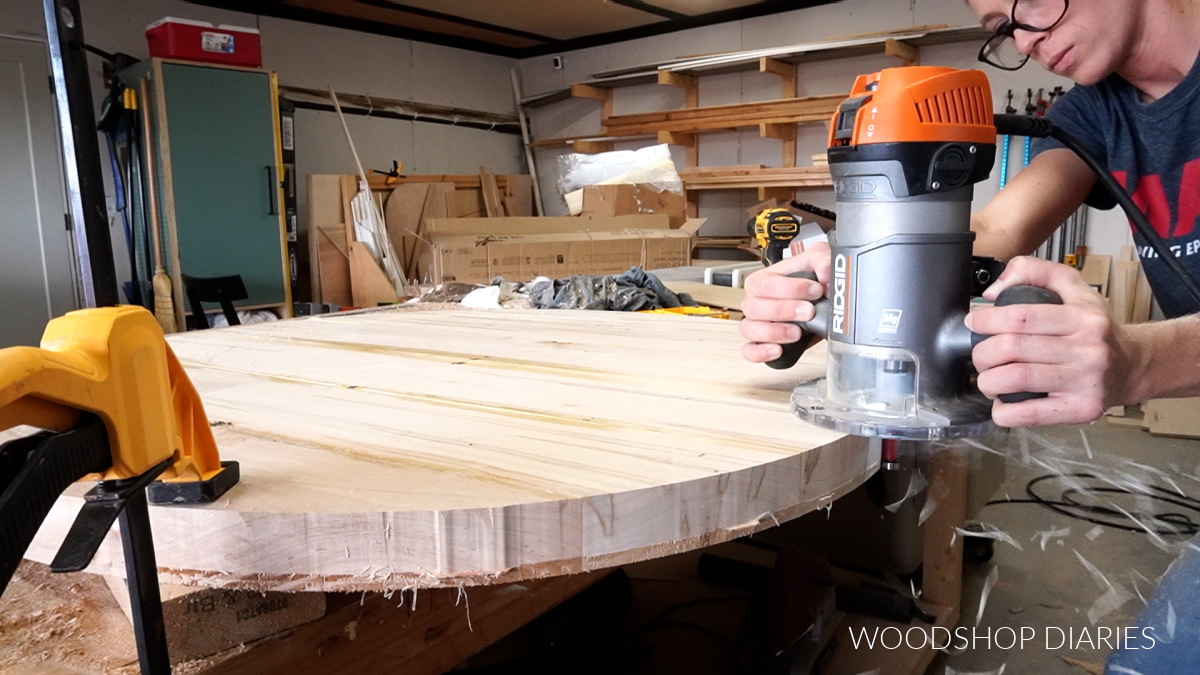
Once you install the base of operations back on, yous can adjust the base upward and down (mine has a turning bicycle for extra precise adjustments) to fix the correct cutting depth yous want (see beneath for cutting depth details).
Routing Direction
When routing an edge, router direction is very important.
.
You should route opposite the direction that the bit is turning.
.
And then, when running the router forth the outside border of a board–for example around the outside edge of a pic frame–you should cut counterclockwise (or running from left to correct).
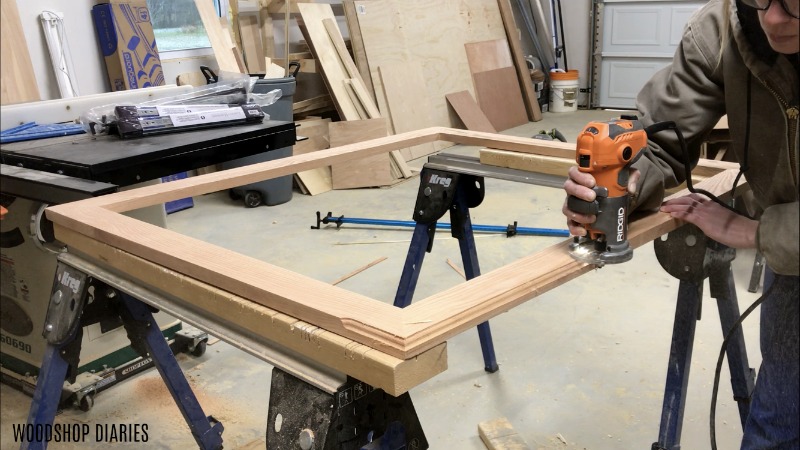
When routing INSIDE a board (like this frame for case), you should route clockwise (so right to left).
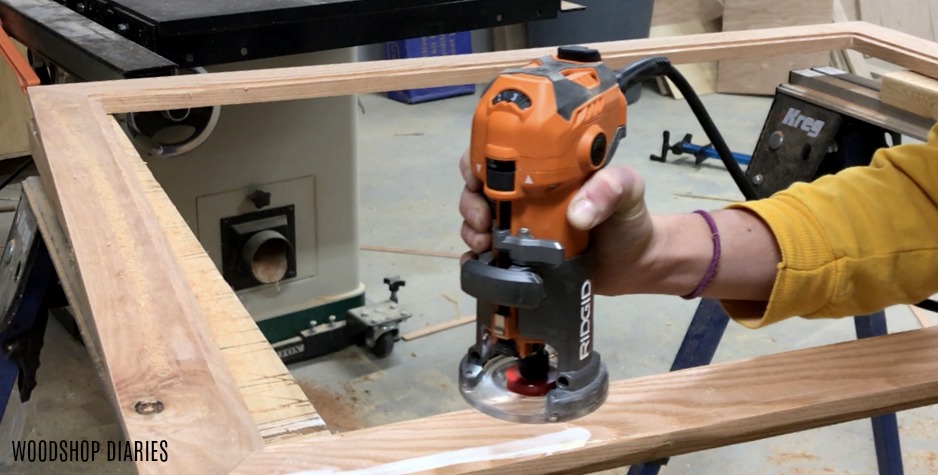
Routing Depth
Your routing depth will vary depending on your application.
.
The depth is adapted by adjusting how far the router flake sticks out of the base. When routing a pocket-sized decorative edge, you may exist able to brand one laissez passer and cutting your edge.
.
But, if you are taking a lot of textile off at a fourth dimension or cut through thick material (similar cutting out a circle tabular array top), it may be best to make several passes, going a little deeper each time.
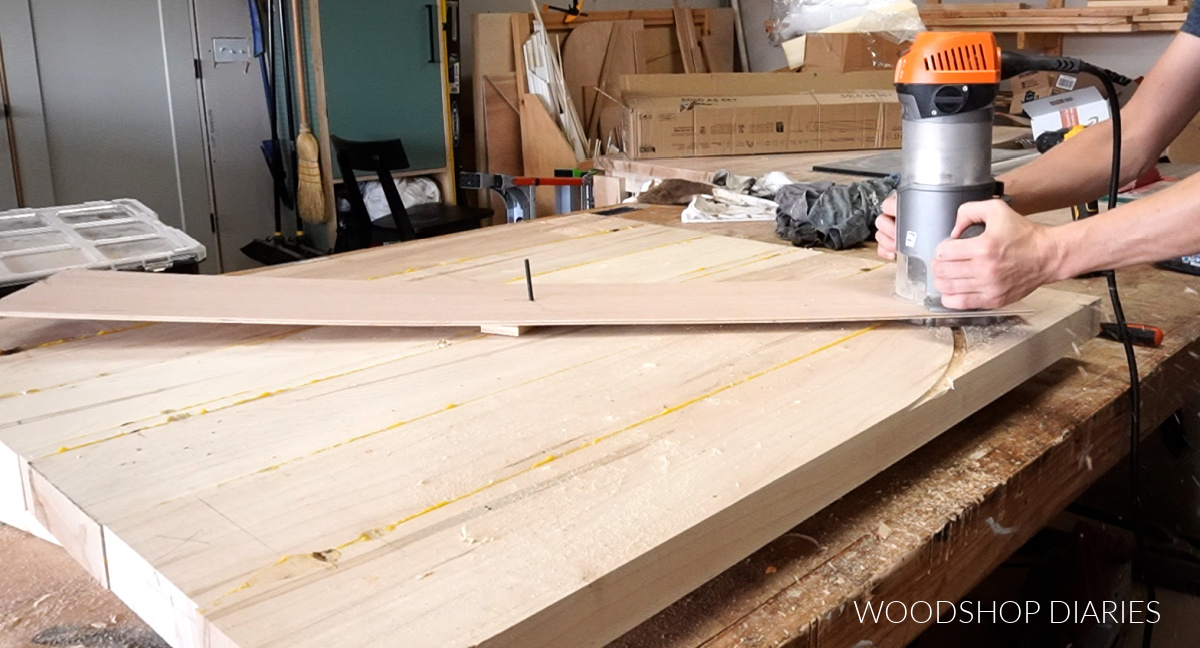
It all depends on how sharp your bits are, how powerful your router is, and how comfortable you are using information technology.
.
When using a router, I HIGHLY recommend doing a couple test pieces to make certain you've got your adjustments set how you lot want.
Router Guide and Jigs
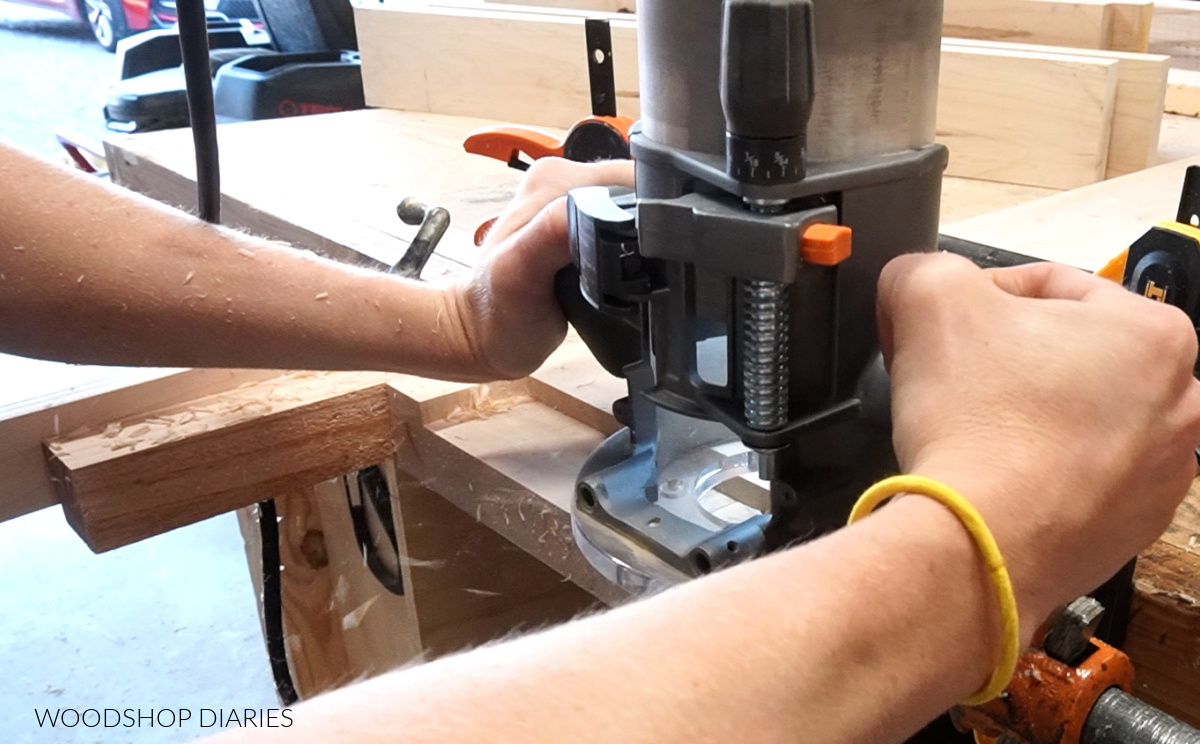
When using a manus held router, it's helpful to use a router guide or jig for more accurate cuts (like the circumvolve jig seen above).
.
Most routers come up with some type of attachment that will run along the edge of a board and allow you to cutting a sure altitude from the edge.
.
Or, you can only clamp a straight edge to run your router along besides. There are likewise many jigs that y'all can make or buy to add to the functionality of your router.
.
A good instance is a circumvolve jig. Yous tin can purchase a circumvolve jig to mount your router onto that will permit you to cut a perfect circle. OR, y'all can make one every bit well.
.
At that place are also TONS of jigs and guides out there for helping cut dovetails, cleave letters, etc.
.
And of grade, you can always may your guides, jigs, and set ups like this ane.
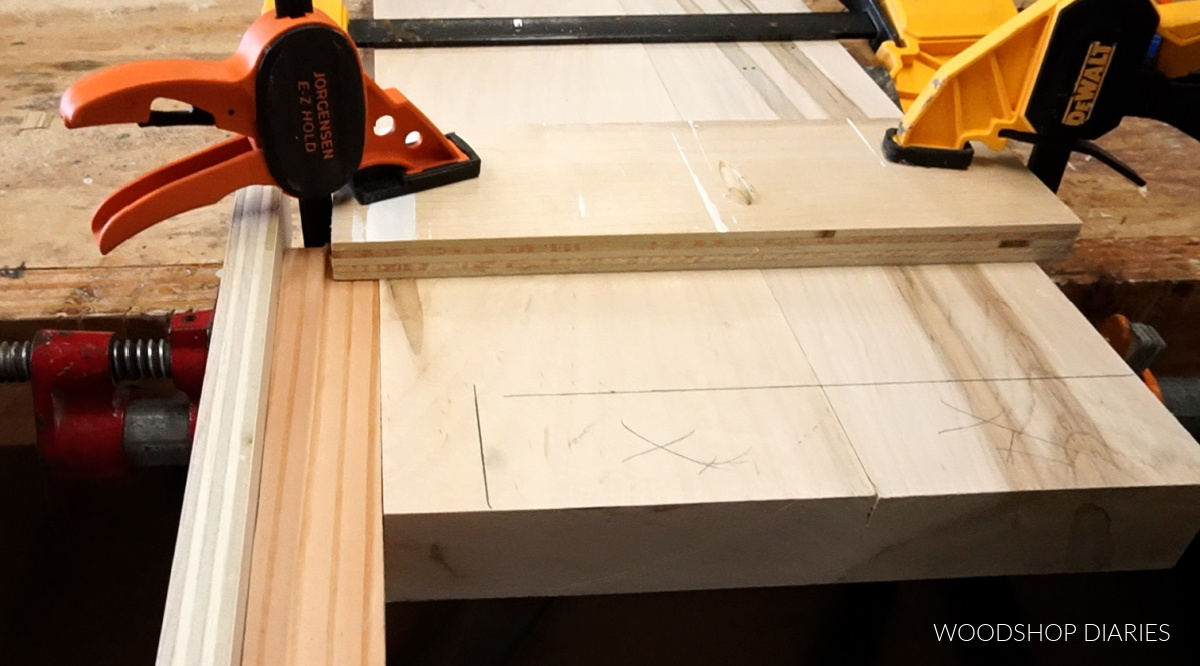
Router Guide: Router Tables
I tin can't say much about router tables as I don't personally take one. However, they can be a VERY useful tool to have–it's on my wish listing.
.
Router tables are basically a table base where you can attach a router upside down and so that the router bit sticks upwardly out of the tabular array. Like a tabular array saw…but for a router.
.
They have rip fences and can make edging small pieces and cutting dadoes quick and painless.
.
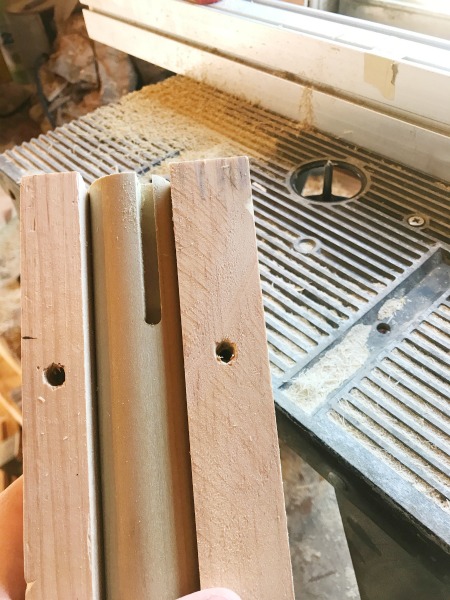
I borrowed my Dad's tiny, mobile router tabular array for one projection one time and kind of only winged it.
.
I congenital a jig to agree a dowel rod then that I could road a slot to insert a i×3 to make a mod dresser base. So I don't have a lot of data to share. But, here is a link to a great guide to router tables.
Router Rubber Tips
I'M NOT A Safe EXPERT. Follow manufacturer's instructions for your specific router. I just have to make that clear.
.
Still, there are some basic safety measures you lot should take when using a router. Many people are agape of routers…and for expert reason.
.
They tin can be dangerous. Then here are a few tips to brand using your router a more than uneventful experience 🙂
.
Go on your hands out of the path of the router.
If you lot are using a hand held router like I've shown in this post, exercise not hold your pieces with your hand.
.
Clamp pieces to your workbench to road and keep your hands out of the way. If you are using a router with ii handles, keep BOTH hands on information technology.
.
The simply router you should utilize with one hand is a trim router.

.
Brand sure you are routing the right direction
I covered this higher up 🙂
.
Don't cutting besides much likewise fast
If you are cutting abroad a lot of material, don't cut too much too fast. Make multiple shallow passes if needed.
.
Use sharp $.25
Use high quality, sharp router bits. Crappy bits can chip, fire, bog downwards and cause kickback. Employ sharp router bits for cleaner and safer cuts.
.
Examine your board earlier routing
Examine the expanse you plan to road. Practise not route if you see cracks, knots, or loose pieces. This can cause damage to your project, or, in worst cases, tin fly off and crusade danger to you.
.
Turn router off when not in use
The scariest role of a router is that it's not a trigger switch like a drill. Yous flip the switch and it's on. And information technology stays on whether your hands are on information technology or not.
.
If your router isn't cut, Plow IT OFF. Don't lay information technology on your workbench running. Don't walk around with it running.
Practice, Practice, Practice
The best lessons are learned by experience. If you want to acquire how to use a router, the best way is to USE A ROUTER.
.
Take information technology tedious and get comfortable using information technology on some small projects or with some scraps. Routers are a very useful tool once you larn how to handle one.
.
If you desire some projects to use your router with, here are a few:
-
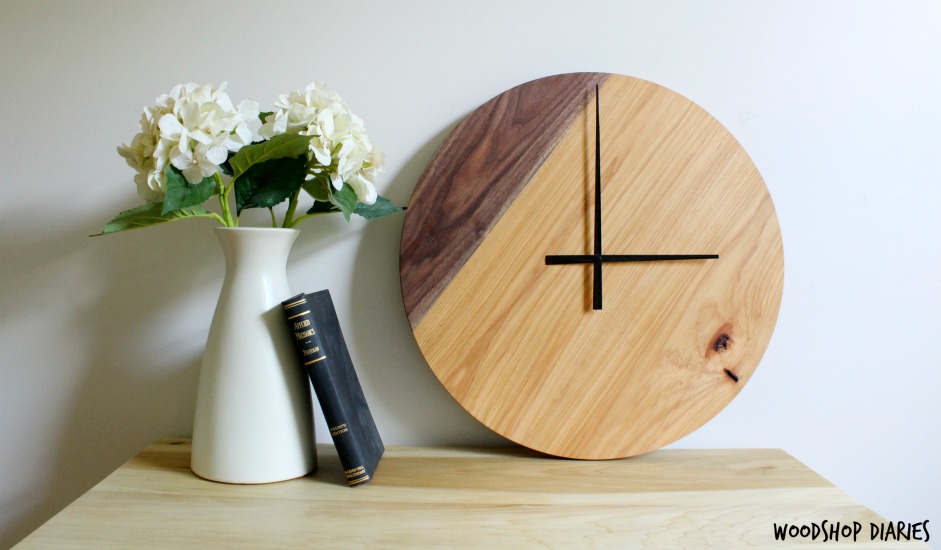
Two Tone Clock -
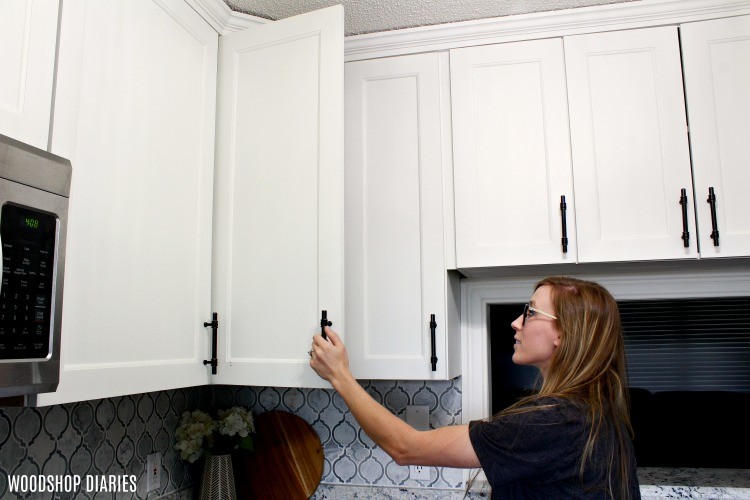
Cabinet Doors -
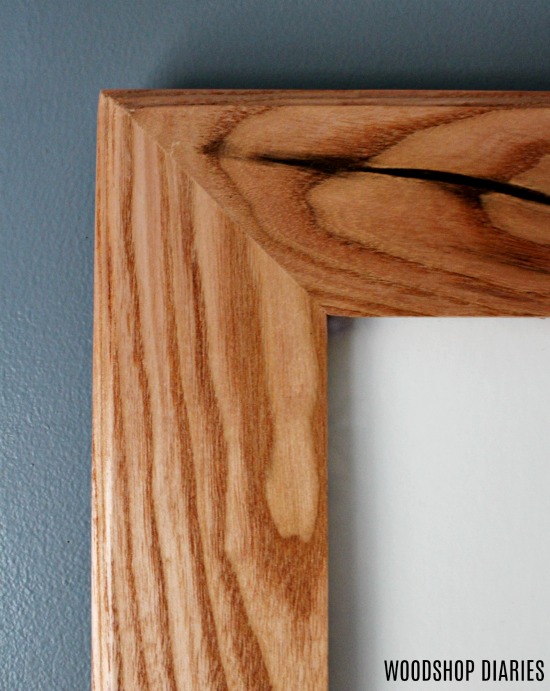
Picture Frame -
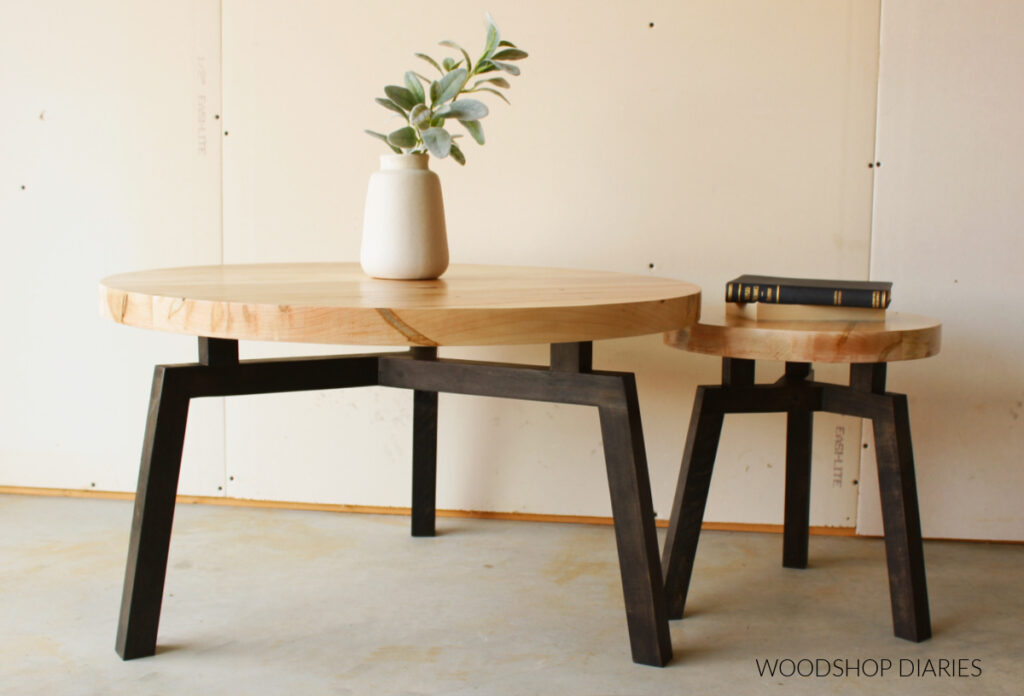
Modern Round Coffee Table -
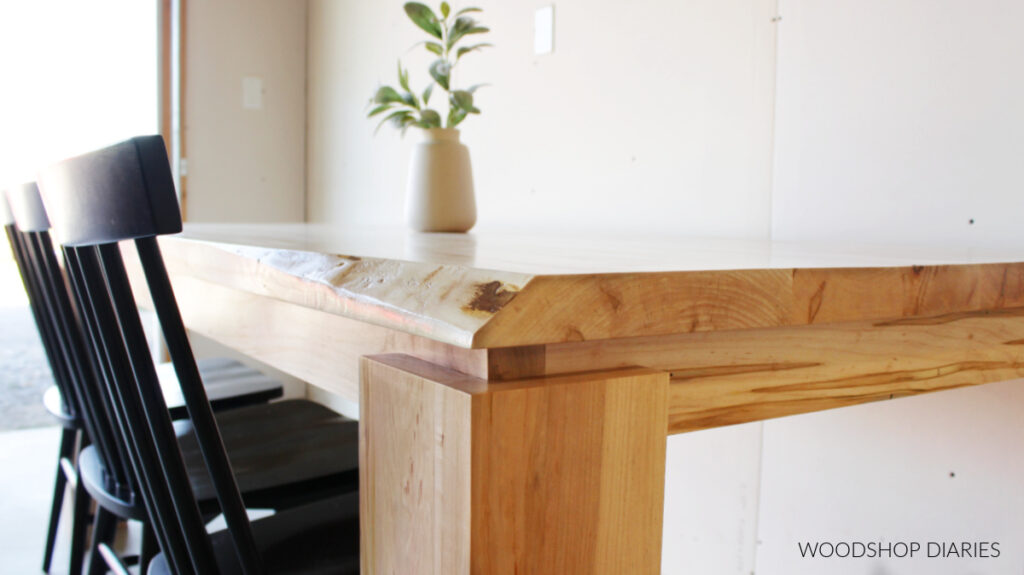
Modern Dining Table -
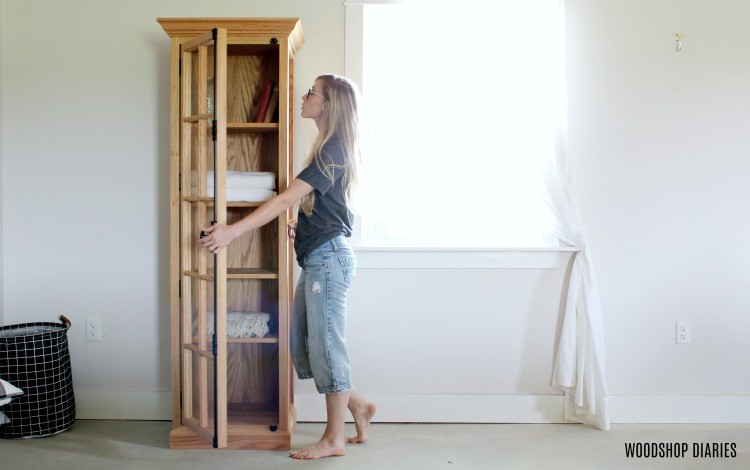
Linen Cabinet -
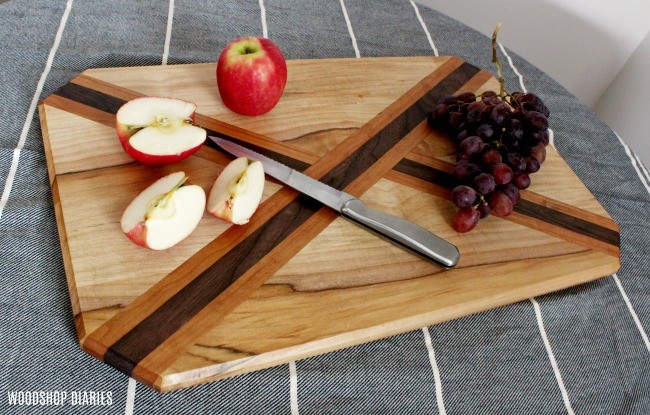
Cutting Board -

Outdoor Dining Tabular array -

Bookshelf
I hope this routing guide has been helpful and I'd dear if you'd pin this for later.
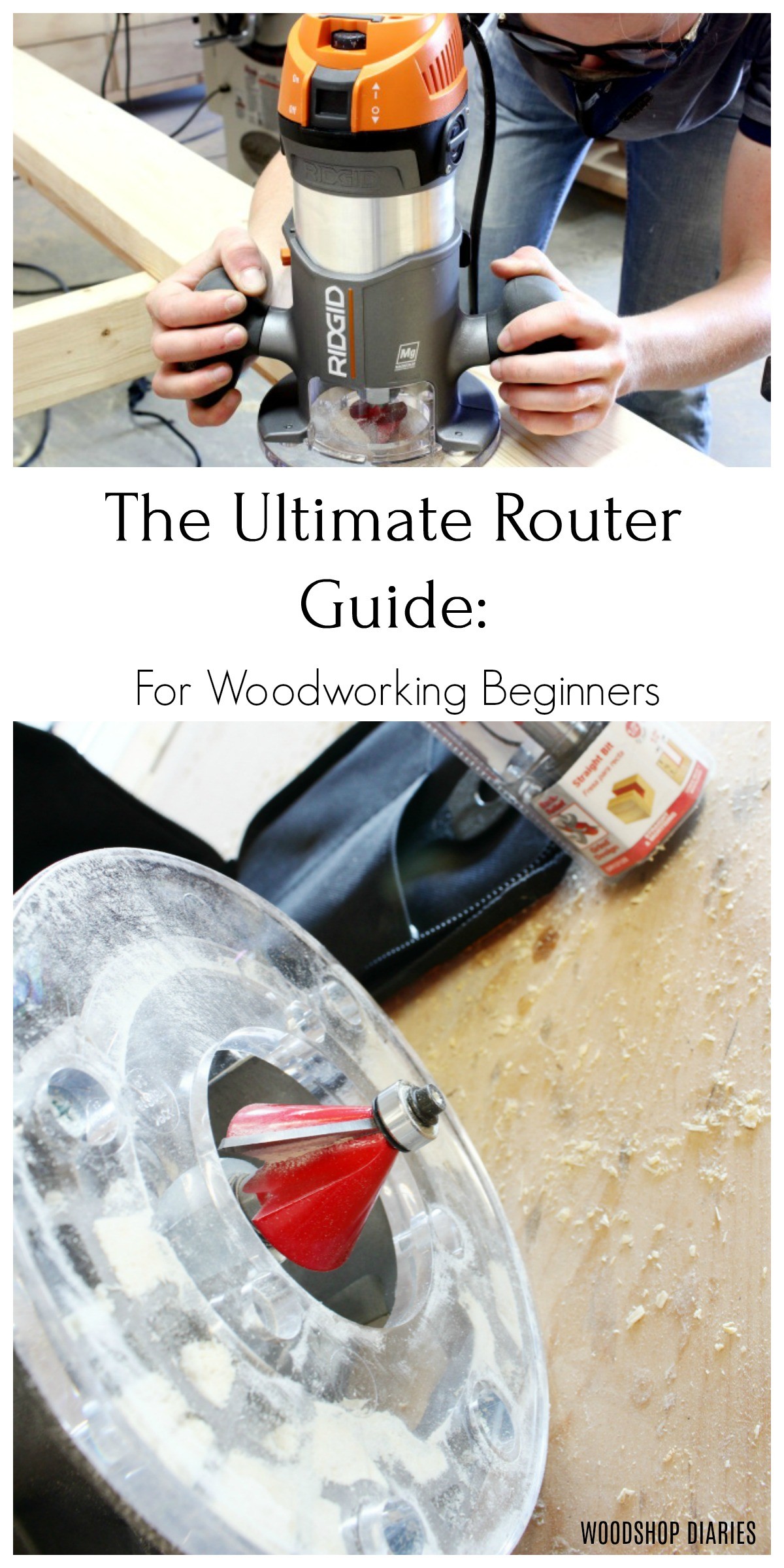
Until adjacent time, happy edifice 🙂


How To Buid Simple Router Templates,
Source: https://www.woodshopdiaries.com/basic-woodworking-router-guide/
Posted by: strongpressessidow1985.blogspot.com
0 Response to "How To Buid Simple Router Templates"
Post a Comment